Oolong teas is often considered one of the most universally appealing tea varieties because they share some characteristics with both green and black teas.
Among all tea types, Oolongs are also the most complex—shaped not only by their growing conditions but by an intricate sequence of processing stages.
Below, you’ll find a step‑by‑step look at how Oolong tea is made and how its controlled oxidation is the key to Oolong depth and complexity.
The steps in producing Oolong Tea
The processing of oolong tea involves several stages: plucking, sun‑withering, indoor withering, oxidation, fixing, rolling, drying, shaping, and finally baking or roasting.
These numerous steps give producers remarkable control over the tea’s final flavour, aroma, appearance, and overall mouthfeel.
1. Plucking
Oolong production begins with the hand‑plucking of mature leaves rather than delicate buds. Because many oolong cultivars grow on steep, high‑elevation slopes, mechanical harvesting is impractical, so the leaves are almost always picked by hand.
These more mature leaves contain higher concentrations of amino acids and carotenoids compounds that significantly contribute to the floral, sweet, and creamy notes often found in oolong teas. Their maturity also makes them more robust, allowing them to withstand the multiple stages of oolong processing.
2. Sun Withering
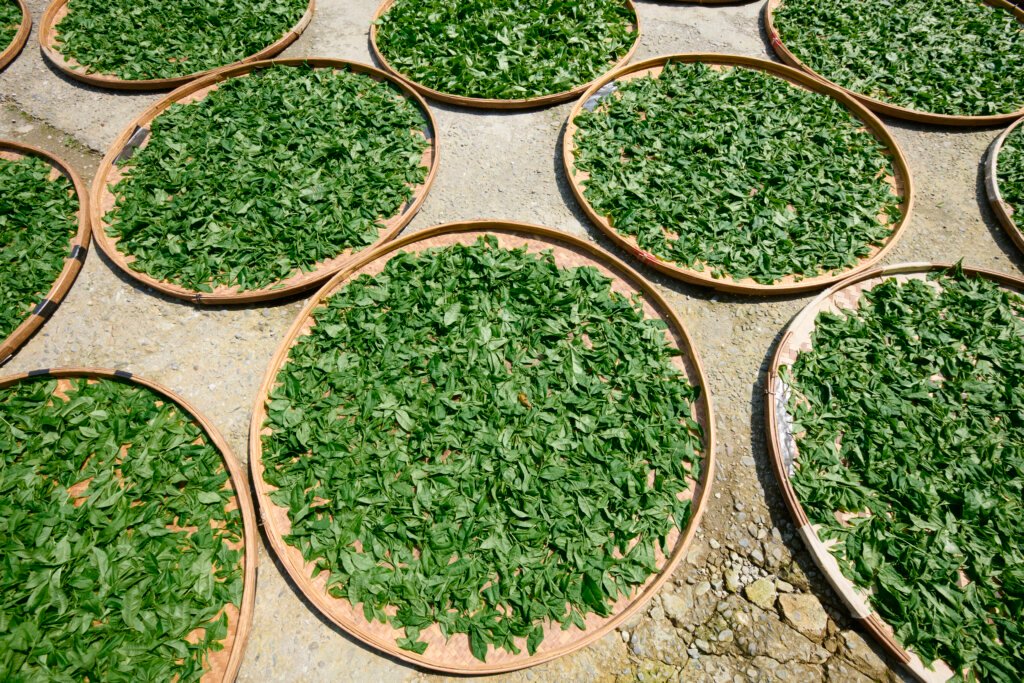
After plucking, the leaves are spread over mesh or bamboo mats to wither for several hours in direct sunlight. This gentle exposure creates a light sunburn on the leaf surface, which supports early aroma development by encouraging natural oxidation. The leaves are shaken periodically to redistribute moisture, introduce slight surface bruising, and ensure that the water content is released slowly and evenly.
3. Indoor Withering
After sun withering, the leaves are taken indoors, where airflow, humidity, and temperature are carefully managed. This phase develops a smoother texture, greater sweetness, and a richer, more developed aroma.
The combination of outdoor and indoor withering produces the wide spectrum of diversity found in oolong teas.
4. Oxidation
The next step, oxidation, is one of the most delicate stages in tea processing, as it strongly shapes the tea’s the tea’s final aroma and flavour profile.
The leaves are spread out on bamboo trays and gently shaken at regular intervals. This light agitation causes the leaves to rub against the bamboo surface, softening their cell walls and releasing aromatic compounds.
Oxidation can run anywhere from 10 to 18 hours, depending on the desired tea style and environmental conditions.
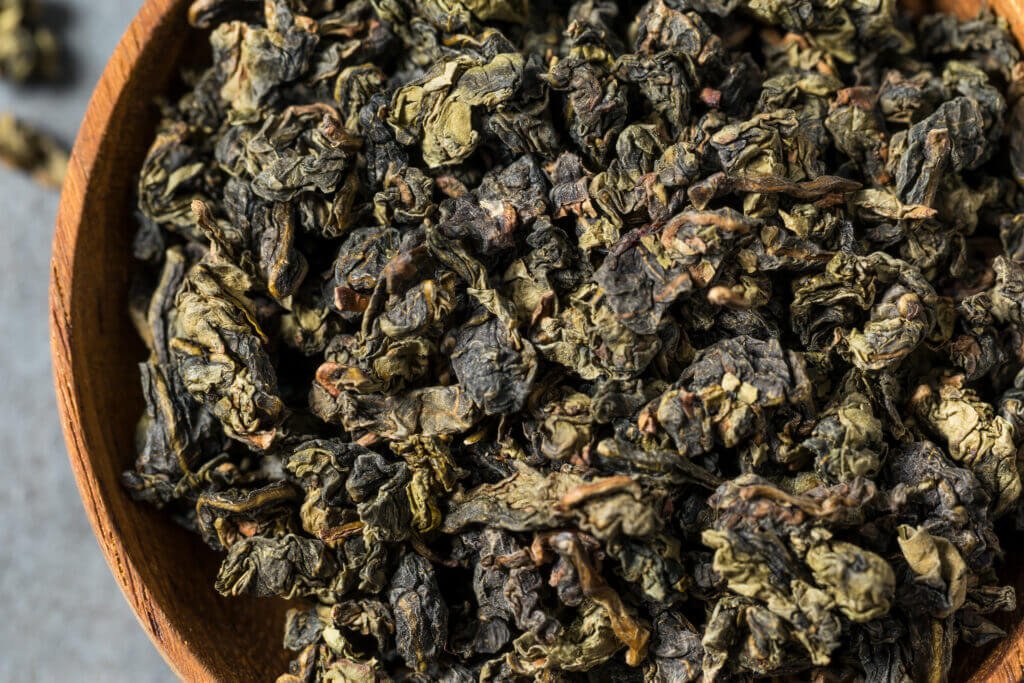
As a result, Oolong teas generally fall into three main categories.: lightly oxidised varieties like our Formosa Dong Ding Wulong; medium oxidised, such as our Formosa Tie Guan Yin Premium; and heavily oxidised Oolongs like our Jeju Island Dark Oolong. The least‑oxidized Oolong teas share similarities with green tea but generally show less bitterness. With higher oxidation, the fresh green and cut‑grass aromas diminish, giving way to richer, more floral ones.
5. Fixing, rolling, drying and shaping
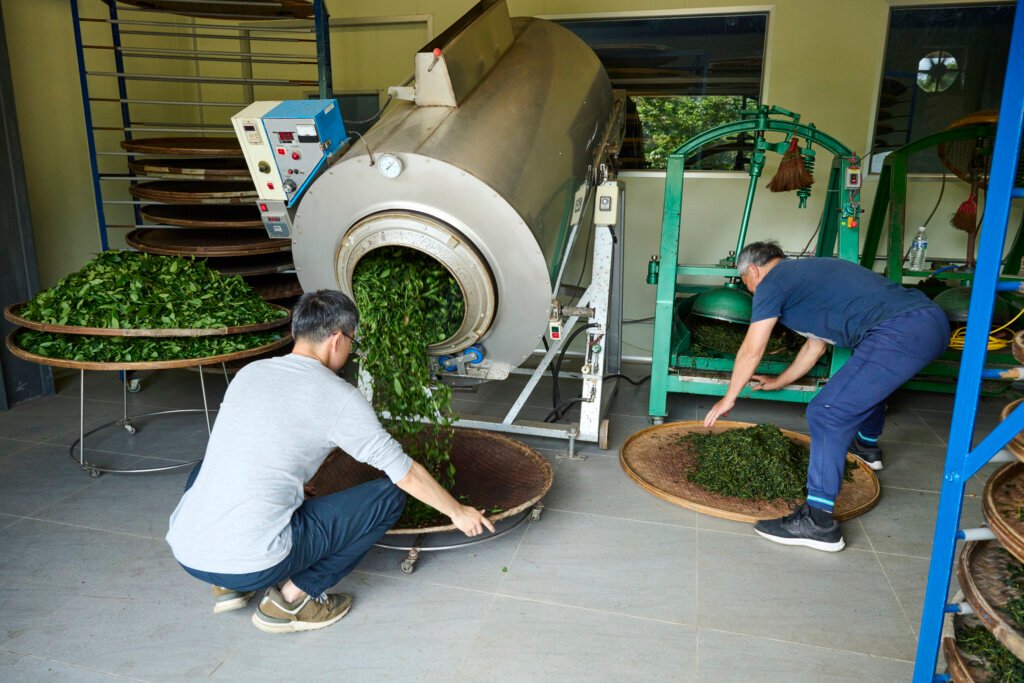
Once the leaves reach the desired level of oxidation, the process is stopped by rapidly applying high heat using a heated spinning drum. This deactivates the enzymes that drive oxidation while keeping the leaf sufficiently moist for rolling.
After fixing, the warm leaves are wrapped and compacted into a cloth ball and allowed to cool briefly. They are then placed into rolling machines, where vigorous rolling breaks down cell walls and releases aromatic oils.
Once the compacted leaves are loosened, they are dried in a conveyor‑belt oven, which moves them through controlled heat zones to remove the remaining moisture.
The tea then is shaped into balls using the standard ball‑rolling method, or it can be rolled manually into long, curved leaves.
6. Baking/roasting
At this step, most oolong teas are baked in ovens or over charcoal for many hours at low temperatures to further develop their flavour and texture, refine the aroma, and remove most of the remaining moisture to preserve the tea for storage.
Conclusion
Oolong teas develop their distinctive character from mineral‑rich mountain terroir, which contribute their floral, creamy and lightly mineral notes. Their character also depends on a multi‑stage production process, with controlled oxidation playing the most decisive role, as this stage ultimately defines each tea’s flavour and aroma.