Green tea is considered the oldest known form of tea. Its origin is often linked to Emperor Shen Nong, who is said to have discovered tea by accident in 2737 BC when fresh leaves accidentally fell into his pot of boiling water.
From its birthplace in China, green tea spread across East Asia—particularly to Japan—before becoming one of the most widely enjoyed beverages in the world.
But what exactly makes green tea green? And how does its processing create such fresh, delicate flavours?
How Green Tea Is Made: Step by Step
In green tea processing, the key distinction from other tea types is the effort to keep the leaf as unchanged as possible, while preventing its degradation.
1) Plucking
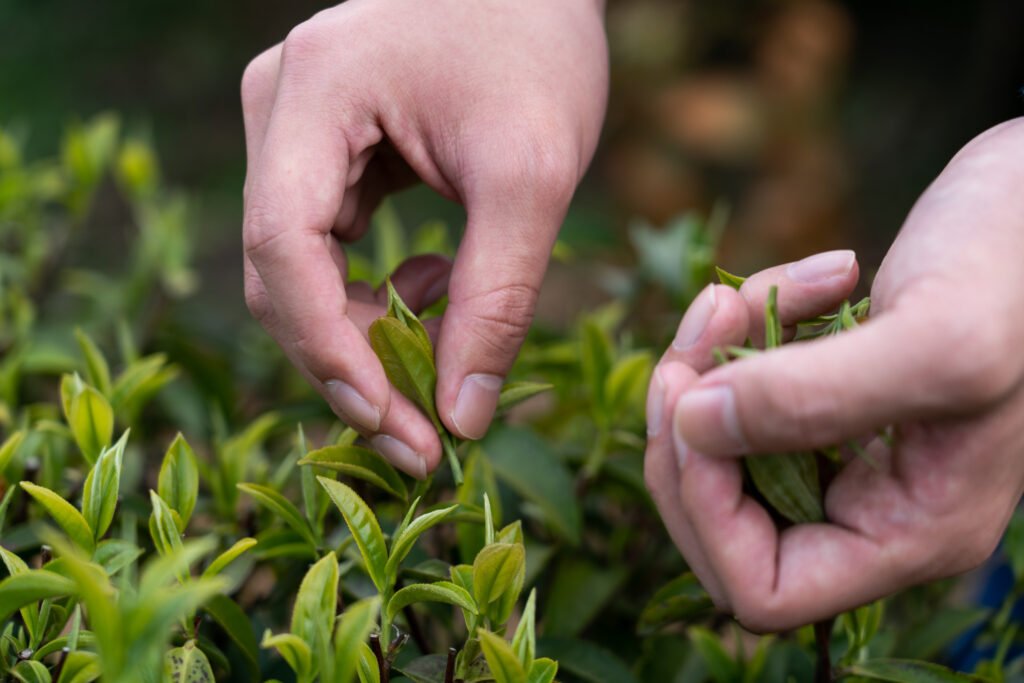
The journey of green tea begins with the plucking of the bud and the first one or two leaves — the youngest and most tender part of the plant. These young leaves naturally contain elevated levels of L‑theanine, an amino acid that contributes to a sweeter, smoother cup with a distinctive umami‑rich character.
2) Whithering
Chinese approach
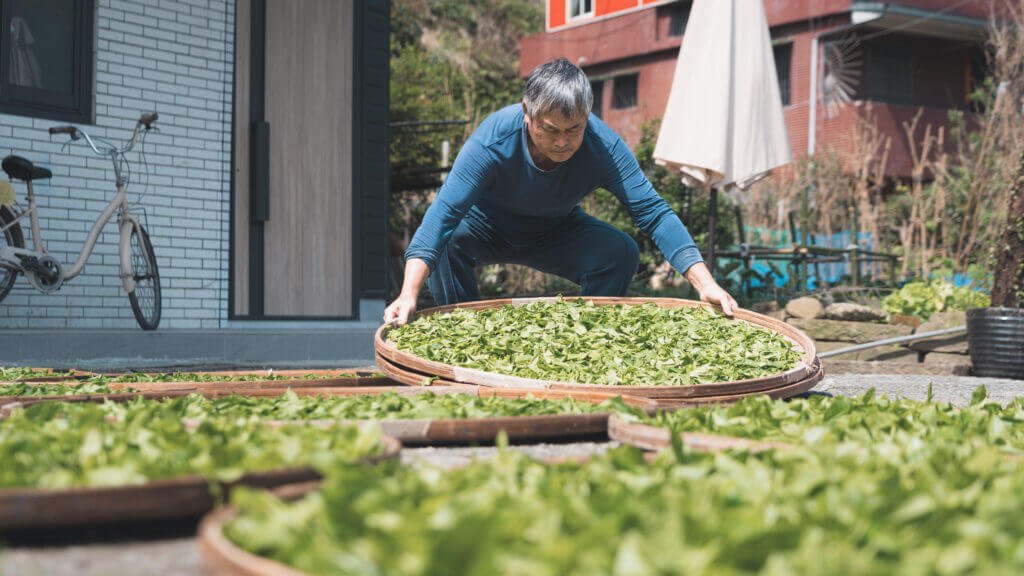
Chinese producers briefly wither freshly picked leaves to soften them for shaping. The process reduces moisture and makes the leaves more pliable. Because any delay can increase oxidation, this stage is carefully controlled to retain freshness and preserve the tea’s bright, vegetal character.
Japanese approach
In contrast, Japanese green‑tea producers typically skip the withering stage and move the leaves quickly to the next processing step to preserve the leaf’s freshness.
3) Fixing (Kill‑Green): Preventing Oxidation
Oxidation is the natural process that causes freshly picked tea leaves to slowly turn brown, shifting their bright, vegetal green‑tea flavours toward the fruitier, floral, or malty notes typical of oolong and black teas.
To prevent this from happening, heat is applied to deactivate the enzymes responsible for oxidation. This step can be done with steam (Japanease method) or with dry heat (Chinese method).
Chinese-style Fixation: Dry Heat
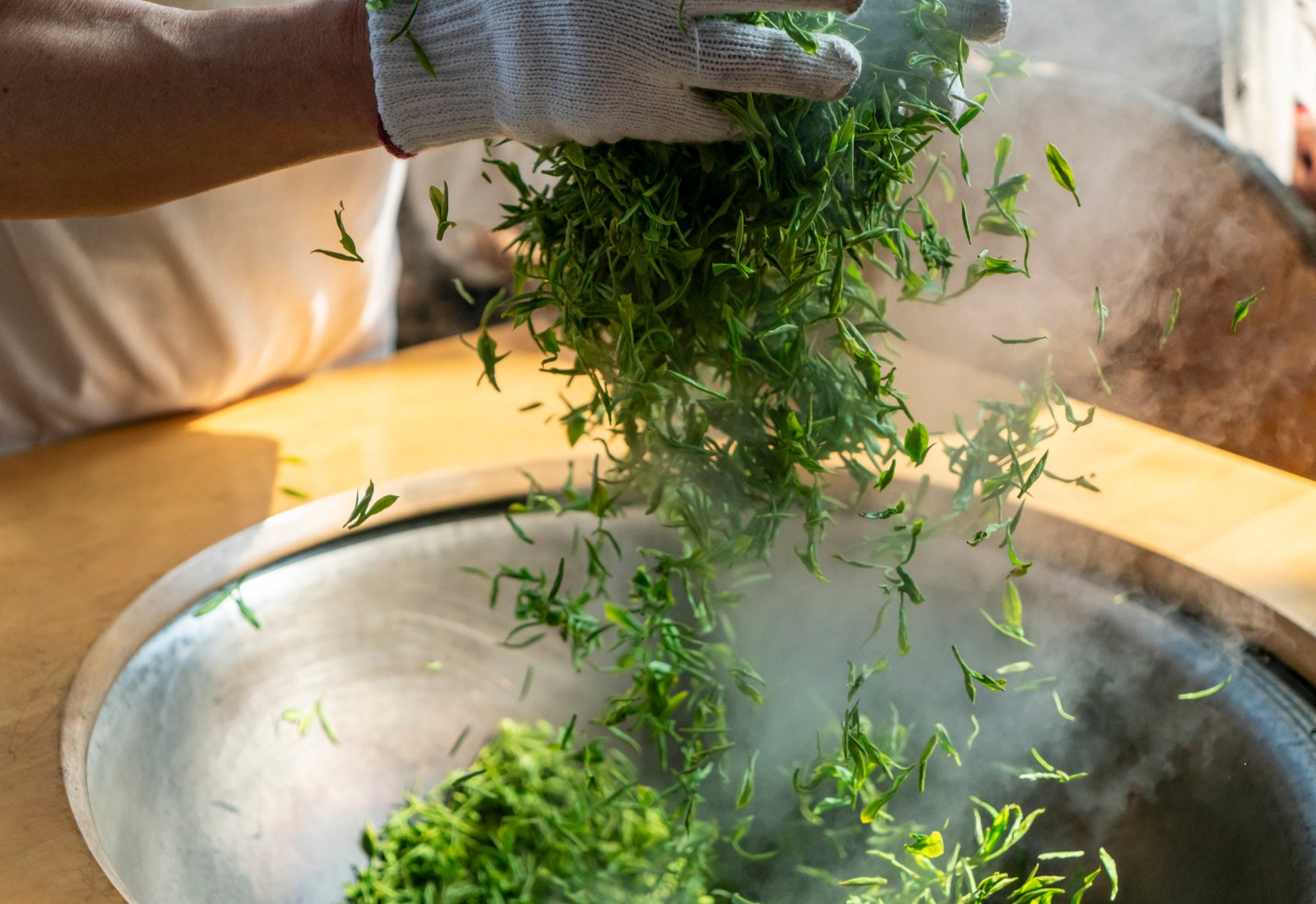
In traditional Chinese green‑tea processing, the leaves are heated in woks fired with wood or coal. This direct‑heat fixation not only stops oxidation but also develops the roasty, toasty, and gently nutty notes that characterise many Chinese green teas.
The leaves are handled in small batches. For flat‑style teas, they are pressed briefly against the hot pan and then stirred back and forth to shape and dry them. For curly‑style teas, the leaves are hand‑rolled and continuously stirred until fully dried.
Long Jing (Lung Ching), Huang Shan Mao Feng, and Anji Bai Cha are well‑known examples of Chinese green teas produced using this method.
Fixation (Japanease-style method)
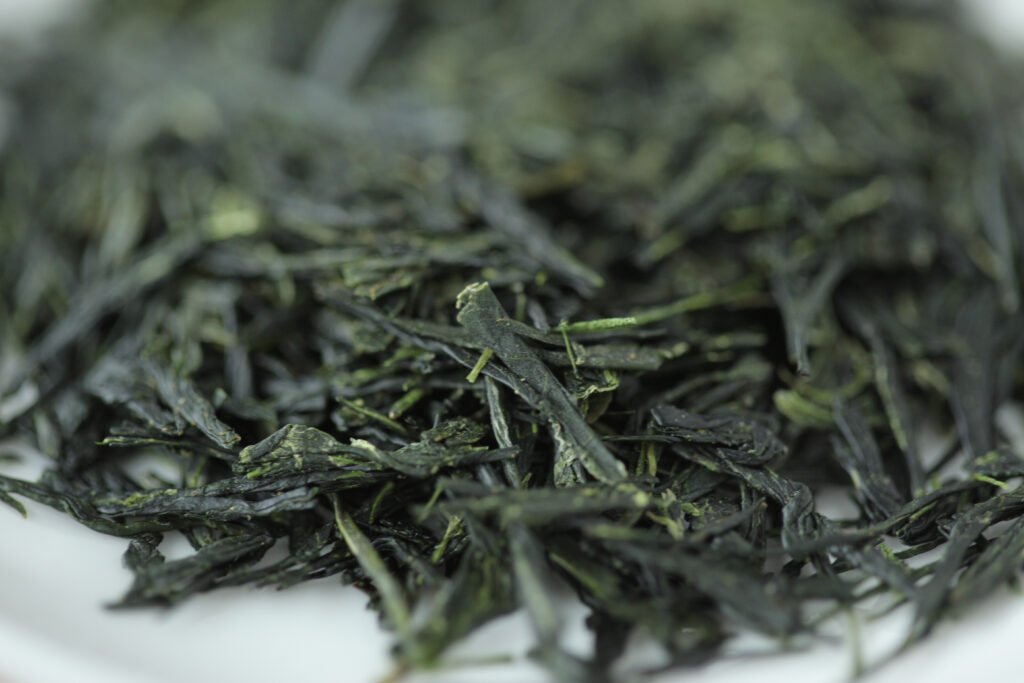
In contrast, Japanese green teas are fixed using steam. Exposing the leaves to hot vapour stops oxidation almost instantly, helping to preserve their natural freshness. This method produces a brighter green liquor and a flavour profile that leans more toward vegetal notes.
This steaming technique is used to make well‑known Japanese teas such as Sencha and Gyokuro.
4) Rolling
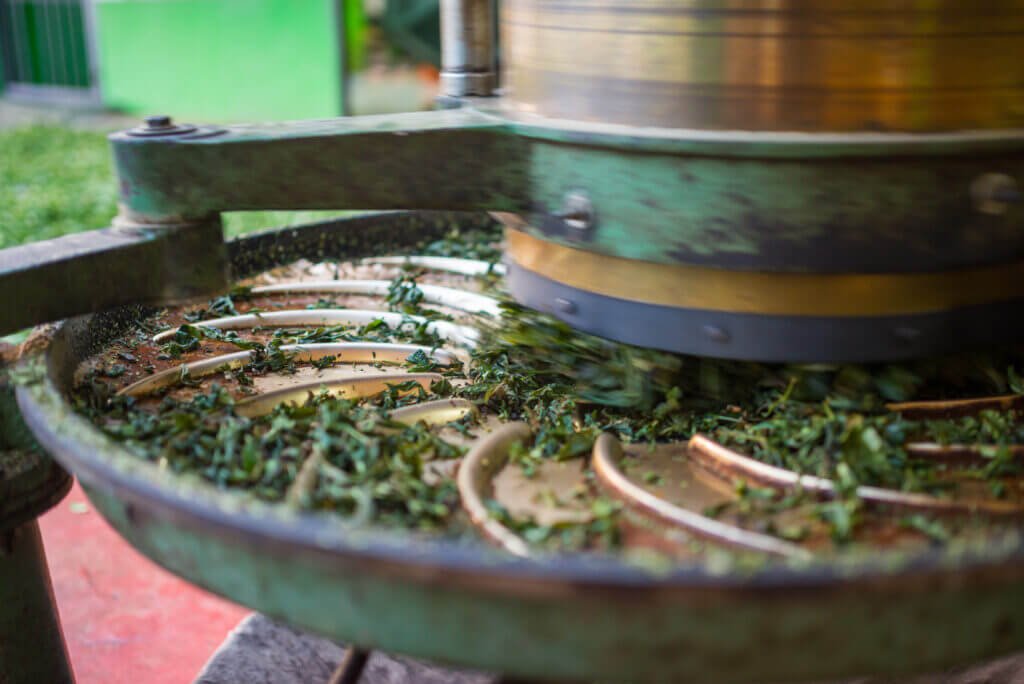
This stage involves rolling the leaves to gently break their cell walls and release the aromatic compounds within. The movement also helps draw out excess moisture, especially from the thicker stems and veins — allowing the leaves to dry more evenly.
During this stage, the leaves undergo controlled mechanical rolling, which gently breaks down the cellular structure and encourages the release of volatile aromatic compounds. This mechanical action also promotes the movement of moisture from within the leaf – resulting in a more even dehydration during the subsequent drying stage.
5) Drying
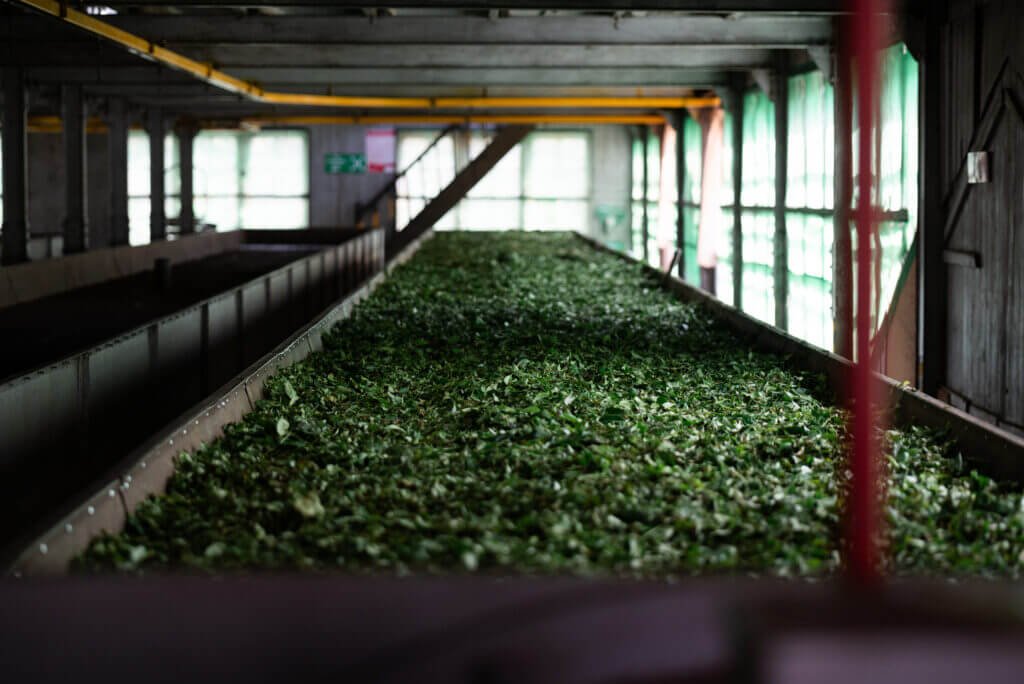
After rolling, the leaves are dispersed in a thin, even layer and subjected either to direct sunlight or to controlled warm‑air drying. This phase reduces the moisture content to a stable level, allowing the volatile aromatic compounds released during rolling to settle. Proper dehydration at this stage is essential, as it prevents microbial growth and helps preserve both the structural integrity and long‑term quality of the finished tea.
Conclusion
The character of green tea is shaped by the careful effort to preserve the leaves as close to their natural state as possible. Chinese dry‑heat fixation introduces a gentle, roasty depth, while Japanese steam fixation maintains a vivid green infusion and more pronounced vegetal flavours.