White tea has its origins in China during the Song dynasty (960–1279), when farmers refined early processing techniques to produce an exceptionally high‑quality tea reserved for the elite. Only much later did the wider population get to enjoy it.
Today, white tea is appreciated for its smoothness and naturally sweet flavour. Below, we explore how it’s made, why it tastes the way it does, and what sets it apart from the other five categories of tea.
The Three Steps of White Tea Processing
Although known for its simplicity, white tea production demands great precision. With only three processing steps—plucking, withering, and drying—even the smallest mistake can compromise the entire batch. Because no additional processing is used, flaws cannot be corrected later.
Plucking
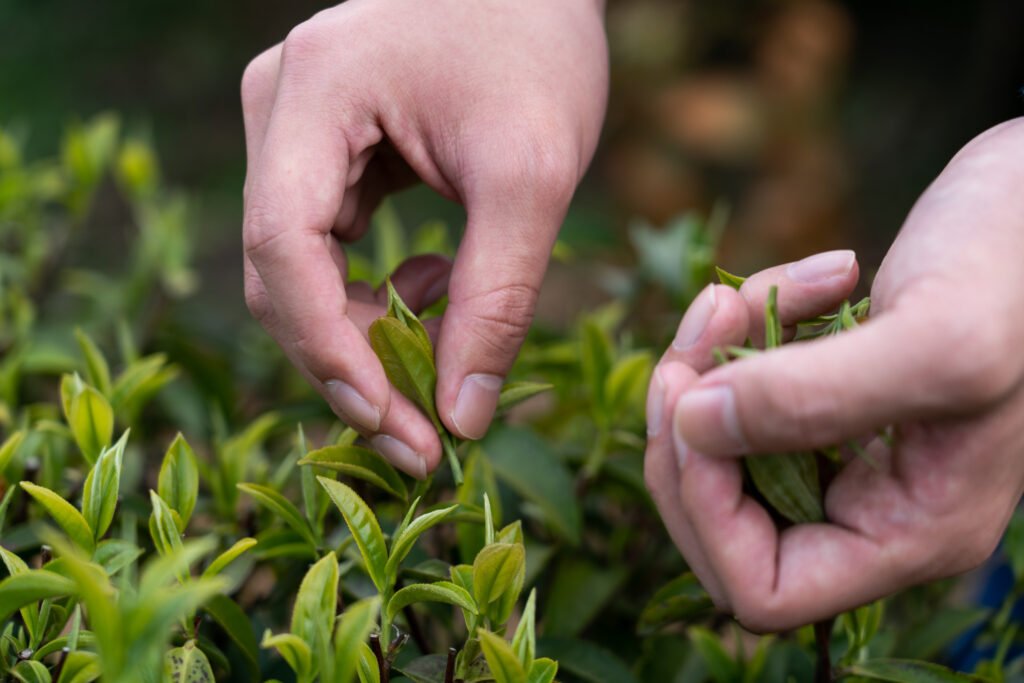
Production begins with hand‑picking the buds and one or two young leaves beside them—a task that cannot be done by machine. These tender shoots grow at the ends of the branches and are more exposed to UV light, insects, and moisture loss.
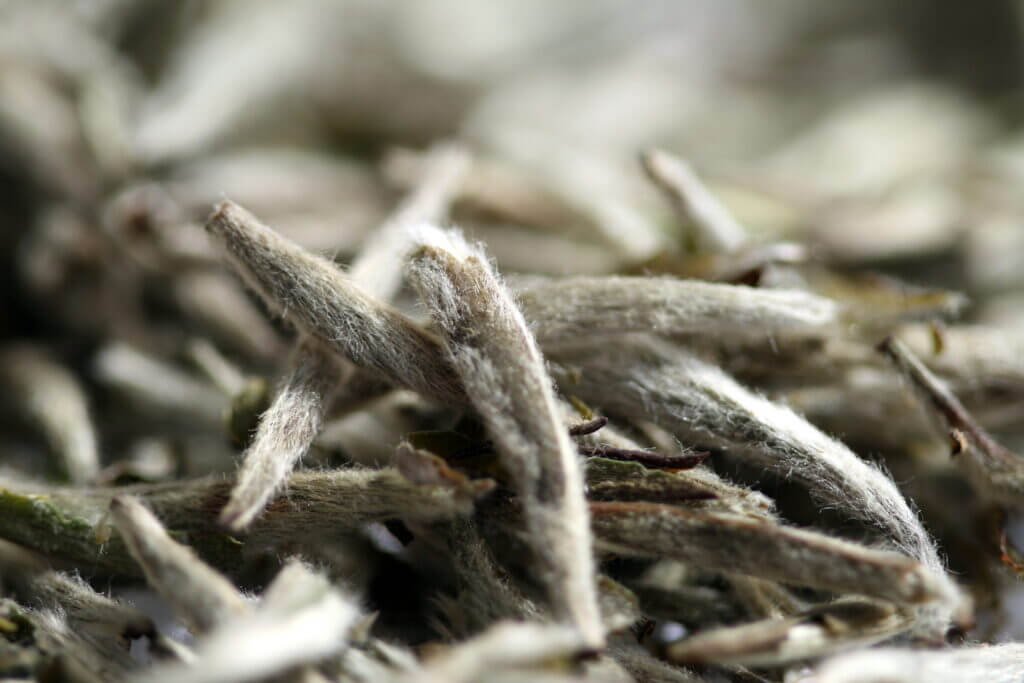
Their fine silver‑white hairs (trichomes) help protect them and also contribute to the tea’s naturally thicker, sweeter liquor with floral nuances. Mature leaves lose most of these hairs, which is why the youngest growth is preferred.
Several styles of white tea exist:
Some are made entirely from buds, such as our Yin Zhen Silverneedle. This style produces a sweet, slightly viscous mouthfeel with gentle floral and creamy notes.
Others are made from a combination of buds and the first two young leaves, like our Darjeeling Bai Mu Dan. This offers a light, refined sweetness and a subtle floral character similar to Silver Needle, complemented by a touch of green, grassy depth.
Whithering and Drying
White tea retains its trichomes because it undergoes minimal processing and very little heat. Unlike other tea types, it is simply withered and dried, without additional steps such as rolling or firing. The aim is to limit oxidation through slow, natural drying.
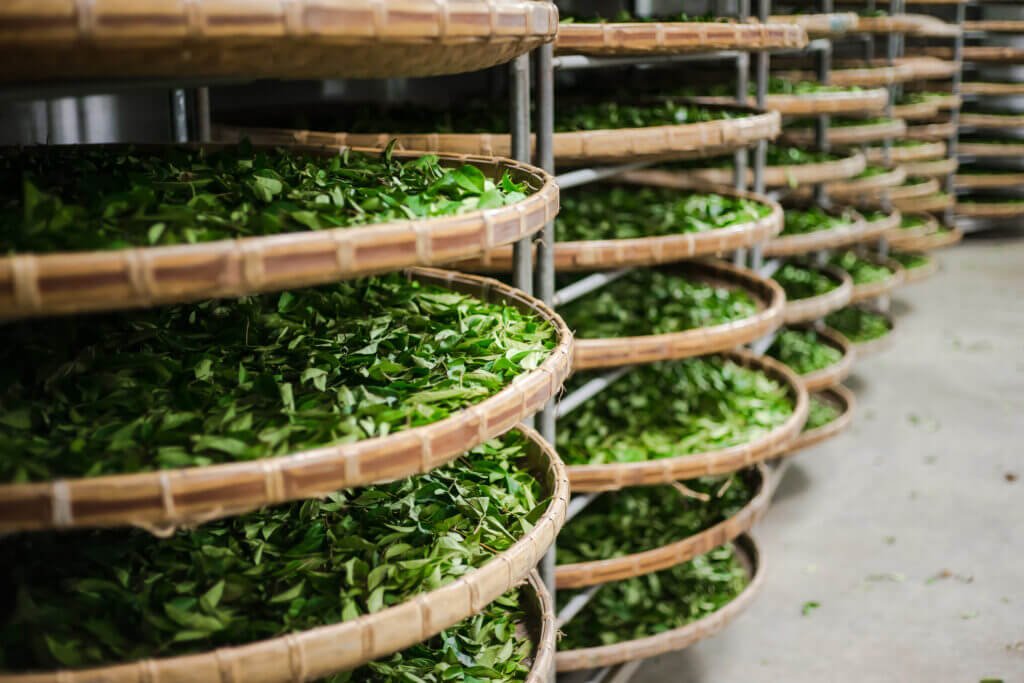
After harvesting, leaves are spread on bamboo mats in a dry area—traditionally exposed to gentle sunlight. The duration of withering depends on the tea style as well as factors such as temperature, humidity, and the thickness of the leaf layer. This stage may last from a few hours to one or even two days.
During withering, the leaves experience light oxidation. As they lose moisture and release volatile compounds, they gradually develop their subtle, natural aromas.
Moisture control is crucial:
Too slow, and the leaves over‑oxidise.
Too fast, and the tea lacks depth and complexity.
For this reason, many producers now wither leaves in climate‑controlled rooms to ensure consistency and quality.
Why It’s Called “White Tea”
Unlike other teas, the name “white” has nothing to do with how the leaves are processed or the colour in the cup. It comes from the fine, silver‑white hairs that cover the buds.
Conclusion
White tea may appear simple—just plucking, withering, and drying—but its minimal handling requires exceptional care. Because nothing can be adjusted later, every stage from hand‑picking to slow drying has a direct influence on the final flavour. This gentle approach helps preserve the tea’s natural sweetness, soft floral notes, and subtle complexity, which is why high‑quality white tea often carries a higher price.